VIntroduction
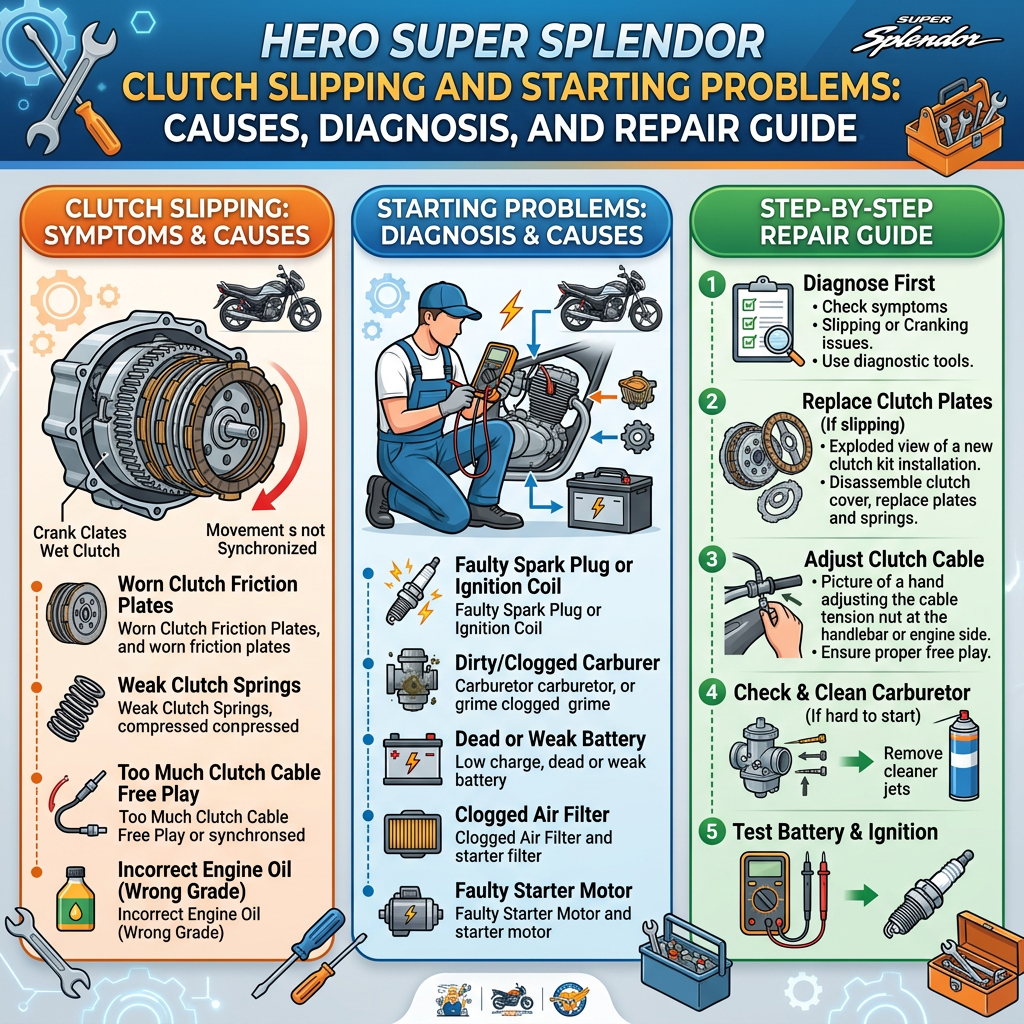
The Hero Super Splendor is a popular commuter motorcycle known for its fuel efficiency, practical design, and everyday usability. However, like any motorcycle, it can develop mechanical problems over time. Two common complaints are clutch slipping while riding and difficulty starting the engine.
These problems can reduce performance, waste fuel, and make daily commuting difficult. The good news is that many causes can be identified through systematic inspection and proper maintenance.
In this guide, we will explain the symptoms, possible causes, troubleshooting methods, and repair procedures for Hero Super Splendor clutch slipping and starting problems.
1. Understanding Clutch Slipping in Hero Super Splendor
A motorcycle clutch connects and disconnects the engine from the transmission. When the clutch lever is released, the clutch should engage properly and transfer engine power to the rear wheel.
Clutch slipping occurs when the clutch cannot transfer engine power effectively. The engine RPM may increase, but the motorcycle does not accelerate as expected.
Common Symptoms of Clutch Slipping
Watch for these warning signs:
- Engine RPM increases without a matching increase in road speed.
- Acceleration becomes weak, particularly when climbing a hill.
- The motorcycle struggles when carrying additional weight.
- The clutch engagement point changes or feels unusual.
- A burning smell develops after repeated slipping.
- Fuel consumption may increase because the engine is working inefficiently.
If these symptoms appear, inspect the clutch system instead of immediately replacing parts.
2. Main Causes of Clutch Slipping
A. Incorrect Clutch Lever Free Play
Incorrect clutch cable adjustment is one possible cause of clutch slipping.
If the cable is too tight, the clutch may remain partially disengaged even when the lever is released. This prevents the clutch plates from gripping properly.
How to check:
- Switch off the motorcycle and park it securely.
- Inspect the clutch lever and cable.
- Check the free play against the specification in the owner’s manual.
- Adjust the cable using the appropriate adjuster.
- Operate the lever several times and confirm that it moves smoothly.
Do not guess the free-play measurement. Specifications can vary by model year and version.
B. Worn Clutch Friction Plates
Clutch friction plates gradually wear with use. Excessive wear can reduce their ability to transfer engine power.
Possible symptoms:
- Poor acceleration under load.
- Engine RPM rising without sufficient road-speed increase.
- Slipping that continues despite correct cable adjustment.
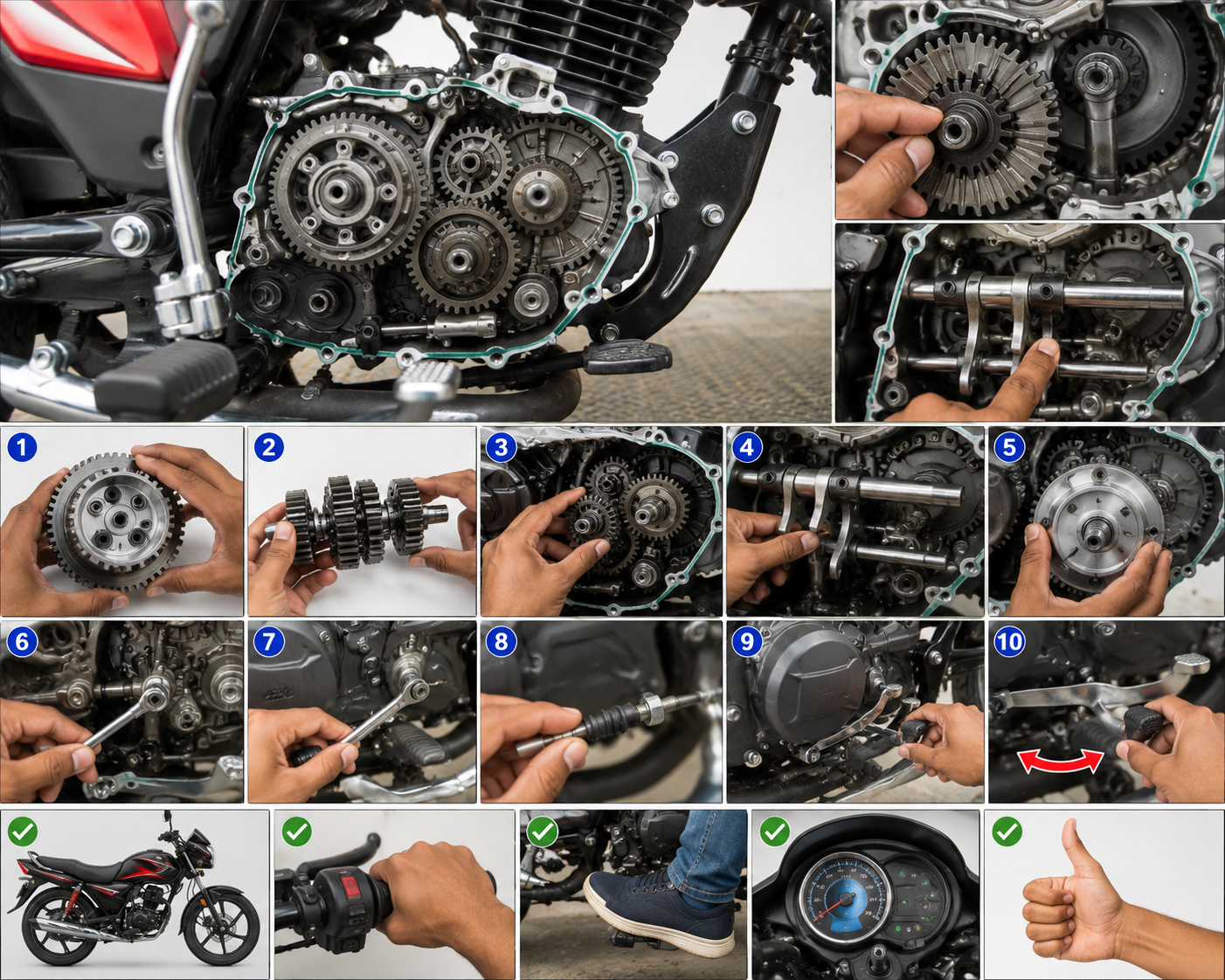
Repair procedure:
- Confirm that cable adjustment is correct.
- Check for external clutch operating problems.
- If slipping continues, inspect the clutch assembly according to the service manual.
- Measure friction plate thickness and inspect the plates for glazing, damage, or wear.
- Replace components that are outside the manufacturer’s specifications.
Use the correct replacement parts for the exact Super Splendor model and year.
C. Weak Clutch Springs
Clutch springs provide the pressure needed to keep the clutch plates engaged.
If the springs become weak or fall outside the specified service limits, the clutch may slip under load.
During clutch servicing, inspect the springs for damage and measure their free length according to the service manual. Replace them if they do not meet the specified limits.
D. Incorrect Engine Oil
The wrong engine oil can contribute to clutch problems on motorcycles that use a wet clutch.
Oil that does not meet the motorcycle manufacturer’s requirements may affect clutch operation.
Always use the recommended oil grade and specification listed in the owner’s manual. Do not assume that every engine oil suitable for a car is suitable for a motorcycle with a wet clutch.
E. Damaged or Warped Clutch Plates
Clutch plates can become glazed, overheated, or distorted.
Damaged plates may cause slipping, poor engagement, or inconsistent clutch operation.
A qualified mechanic should inspect the plates for discoloration, warping, and wear. Replace damaged components rather than attempting an unreliable repair.
3. Hero Super Splendor Starting Problems
Starting problems can have several causes. The correct diagnosis depends on whether the engine fails to crank, cranks without starting, or starts and then stops.
A. Weak or Discharged Battery
On electric-start versions, a weak battery can cause slow cranking, clicking sounds, or no response when the starter button is pressed.
How to troubleshoot:
- Check whether the headlight and instrument lights behave normally.
- Inspect the battery terminals for looseness or corrosion.
- Confirm that the battery connections are secure.
- Have the battery tested if the starter turns slowly.
- Check the charging system if the battery repeatedly becomes discharged.
Never short the battery terminals with a tool. Incorrect handling can cause sparks, burns, or battery damage.
B. Faulty Starter Motor or Starter Circuit
If the battery is charged but the starter does not operate correctly, the problem may involve the starter motor, relay, wiring, switch, or a related electrical connection.
Listen carefully when pressing the starter button.
- A single click may indicate a battery, relay, connection, or starter-motor problem.
- Repeated clicking often suggests insufficient battery power or a poor connection.
- No sound may indicate a switch, wiring, relay, or other electrical fault.
These symptoms are clues, not definitive diagnoses. Test the electrical system before replacing parts.
C. Spark Plug Problems
The spark plug ignites the air-fuel mixture inside the engine. A worn, fouled, damaged, or incorrectly gapped spark plug can make starting difficult.
Inspection steps:
- Switch off the engine and allow it to cool.
- Remove the spark plug using the correct tool.
- Inspect the electrode for excessive deposits, wear, or damage.
- Check the gap against the specification for your model.
- Clean or replace the plug as appropriate.
If the new or serviced spark plug does not solve the problem, inspect the ignition system rather than repeatedly replacing plugs.
Avoid touching ignition components while the engine is being cranked.
D. Fuel Supply Problems
A motorcycle may crank normally but fail to start if fuel is not reaching the engine correctly.
Possible causes include stale fuel, a restricted fuel passage, a clogged filter where fitted, or a malfunctioning fuel-delivery component.
Check the fuel level and use fresh fuel. If the motorcycle has been unused for a long time, have the fuel system inspected.
Fuel-system procedures differ between carbureted and fuel-injected versions. Follow the correct service instructions for the specific model.
E. Air Filter Restriction
A dirty or blocked air filter can disturb the air supply needed for combustion.
Possible symptoms include difficult starting, poor acceleration, and irregular engine operation.
Inspect the air filter according to the maintenance schedule. Clean or replace it using the manufacturer’s recommended procedure. Do not wash a filter unless its design specifically permits washing.
F. Incorrect Valve Clearance
Valve clearance that is outside the specified range can affect engine performance and make starting difficult, particularly on an engine that has developed a mechanical fault.
Checking valve clearance requires the correct procedure, engine temperature conditions, and measurement specifications.
If the motorcycle remains difficult to start despite basic checks, ask a qualified mechanic to inspect the valve clearance and compression.
G. Carburetor or Fuel-Injection Problems
Depending on the motorcycle’s model year and configuration, fuel delivery may involve a carburetor or a fuel-injection system.
On carbureted versions, a blocked pilot circuit, incorrect adjustment, or fuel contamination may cause difficult starting or unstable idling.
On fuel-injected versions, possible causes include an electrical supply problem, a sensor fault, or a fuel-delivery issue.
Do not adjust the carburetor or replace injection components without identifying the actual fault.
4. Step-by-Step Troubleshooting Guide
Follow this order to avoid unnecessary repairs.
Step 1: Identify the starting symptom
Determine whether the engine does not crank, cranks but fails to start, or starts and then stops.
Step 2: Check the battery and connections
Inspect the battery condition and terminals on electric-start versions. Test the battery if necessary.
Step 3: Check the fuel supply
Confirm that sufficient fresh fuel is available and that there are no obvious fuel-delivery problems.
Step 4: Inspect the spark plug
Check its condition and the specified gap. Investigate the ignition system if the problem continues.
Step 5: Inspect the air filter
A restricted filter can affect combustion and engine performance.
Step 6: Check clutch cable adjustment
If the motorcycle starts normally but engine RPM rises without corresponding acceleration, verify clutch free play.
Step 7: Inspect internal components if necessary
Persistent clutch slipping may require clutch plate and spring inspection. Continued starting problems may require compression, valve-clearance, or electrical testing.
5. Can Clutch Slipping Cause Starting Problems?
Clutch slipping and engine starting problems are generally separate faults.
A slipping clutch usually affects power transfer after the engine starts. A weak battery, ignition fault, fuel-delivery issue, or mechanical engine problem is more likely to cause difficulty starting.
However, two faults can occur at the same time, especially on an older or poorly maintained motorcycle.
Diagnose each symptom separately rather than assuming that one repair will solve both problems.
6. Maintenance Tips to Prevent These Problems
Regular maintenance can reduce the risk of unexpected breakdowns.
- Follow the recommended engine oil grade and replacement interval.
- Check clutch lever free play during routine inspections.
- Maintain the battery and keep electrical connections secure.
- Inspect the spark plug at the scheduled service interval.
- Clean or replace the air filter according to its service requirements.
- Use fresh fuel and avoid leaving fuel in an unused motorcycle for extended periods.
- Inspect the drive chain and maintain the correct tension and lubrication.
- Investigate unusual engine noises, burning smells, or changes in acceleration promptly.
- Keep a record of repairs and scheduled maintenance.
Good maintenance cannot prevent every failure, but it can help identify wear before it causes a more serious problem.
7. When Should You Visit a Mechanic?
Seek professional inspection if:
- The clutch continues slipping after correct adjustment.
- The clutch housing produces unusual noises.
- The starter motor turns but the engine will not start after basic checks.
- The engine repeatedly stalls or loses power.
- Fuel leaks or damaged electrical wiring are present.
- Compression or valve-clearance problems are suspected.
Stop riding if the clutch cannot transfer power reliably, the engine behaves unpredictably, or a fuel leak is present. Continuing to ride may create a dangerous situation.Read also ford-f-150-engine-problems-common-causes-diagnosis-and-repair-guide
Conclusion
Hero Super Splendor clutch slipping and starting problems can result from several different faults. Incorrect clutch free play, worn friction plates, weak springs, or unsuitable engine oil may contribute to clutch slipping. Starting difficulties may be related to the battery, starter circuit, spark plug, fuel supply, air filter, valve clearance, or other engine components.
The best repair method is to identify the symptoms, perform basic checks, and test the relevant components before replacing parts. Use the correct service specifications for the motorcycle’s model year and version.
With proper diagnosis and regular maintenance, many common problems can be resolved before they develop into expensive repairs. Always prioritize safe working practices and consult a qualified mechanic for repairs that require specialized tools or internal engine work.