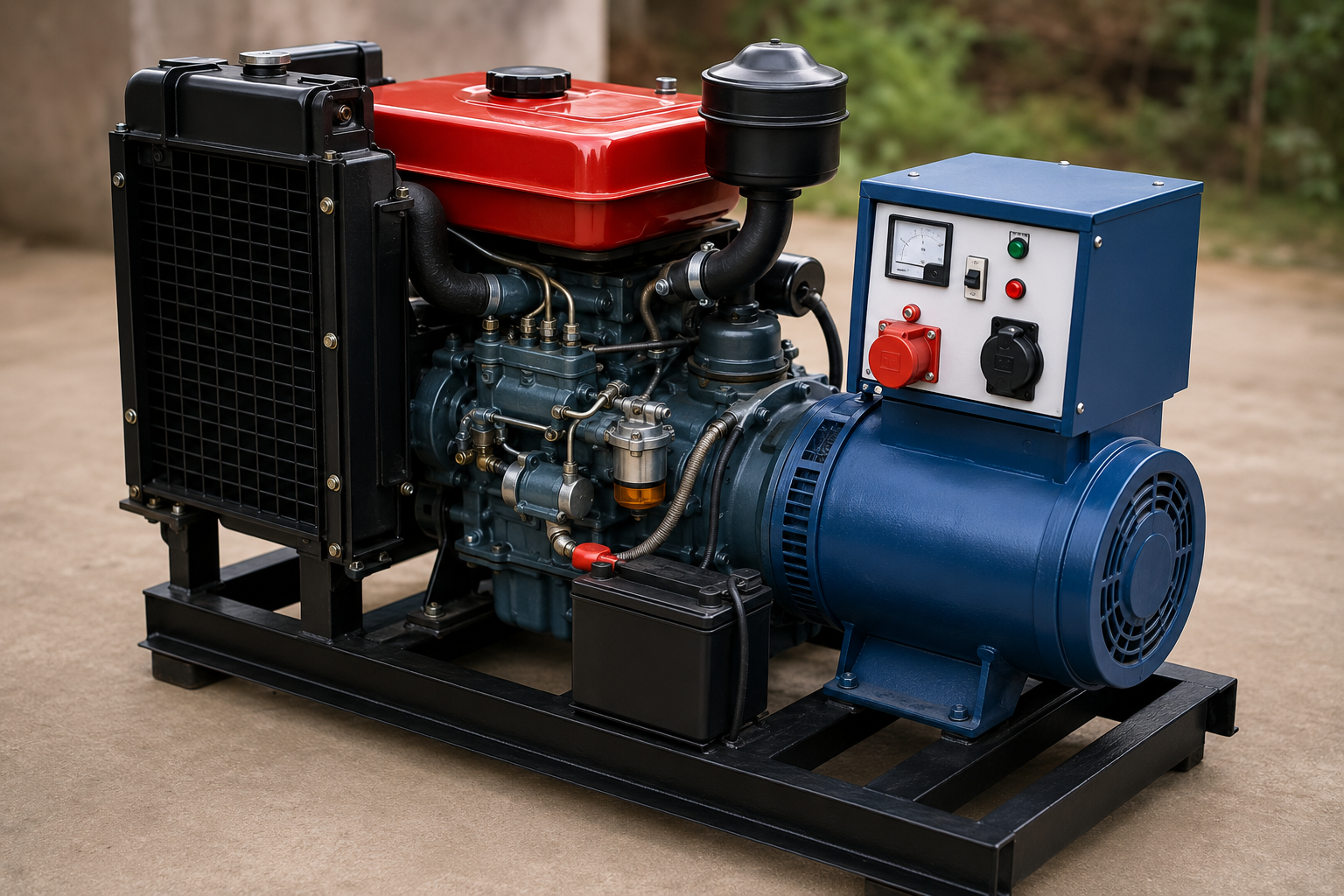
A diesel generator set, commonly known as a diesel genset, combines a diesel engine with an electrical generator to produce electricity. A 10 HP diesel engine can be used in a variety of applications depending on the engine design, generator efficiency, operating speed, and alternator rating.
From agricultural farms and workshops to small businesses, construction sites, rural locations, backup power systems, and remote work areas, diesel generator sets can provide valuable electrical power when the main electricity supply is unavailable or unreliable.
However, horsepower alone does not determine the electrical output of a generator. The actual generator capacity must be identified from the alternator rating, normally expressed in kW or kVA, along with the engine’s rated speed and operating specifications.
In this guide, I will explain how a 10 HP diesel generator set works, its major components, starting system, fuel system, cooling system, lubrication, electrical generation, maintenance requirements, common problems, and practical troubleshooting methods.
What Is a 10 HP Diesel Generator Set?
A 10 HP diesel generator set is a compact power-generation system built around a diesel engine and an electrical alternator.
The diesel engine provides mechanical power.
The alternator converts that mechanical power into electrical energy.
In simple terms:
Diesel fuel → Engine combustion → Mechanical rotation → Alternator → Electrical power
The complete generator set may also include a fuel tank, control panel, battery, cooling system, exhaust system, mounting frame, protective covers, and various safety devices.
The exact design depends on the manufacturer and application.
How Does a Diesel Generator Work?
The diesel engine burns fuel inside its cylinders.
During combustion, expanding gases push the piston downward.
The connecting rod transfers this movement to the crankshaft.
The crankshaft converts the reciprocating movement of the piston into rotary motion.
The rotating crankshaft drives the alternator.
Inside the alternator, mechanical rotation produces electrical energy through electromagnetic induction.
The generated electricity is then delivered through the generator’s output terminals to the connected electrical load.
This entire process happens continuously while the generator is running.
Major Components of a 10 HP Diesel Generator
A typical diesel generator set contains several important systems.
Diesel Engine
The engine is the prime mover.
Alternator
The alternator converts mechanical energy into electrical energy.
Fuel System
The fuel system stores, filters, and supplies diesel to the injection system.
Lubrication System
Engine oil reduces friction and helps remove heat from moving components.
Cooling System
The cooling system controls engine temperature.
Air Intake System
The engine requires clean air for combustion.
Exhaust System
The exhaust system safely carries combustion gases away from the engine.
Battery and Starting System
The battery and starter system provide the energy required to start the engine on electrically started models.
Control Panel
The control panel allows the operator to monitor and control the generator.
Fuel Tank
The fuel tank stores diesel for engine operation.
Understanding the 10 HP Rating
One important point often causes confusion.
10 HP refers to engine power, not directly to generator electrical output.
The electrical output depends on several factors, including:
- Engine rated speed
- Alternator efficiency
- Generator design
- Power factor
- Continuous or standby rating
- Manufacturer specifications
Therefore, a 10 HP diesel engine should not automatically be assumed to produce a specific kVA or kW rating.
Always check the generator nameplate for the actual electrical output.
The nameplate may provide information such as:
- Rated voltage
- Rated current
- Frequency
- Rated speed
- kW
- kVA
- Phase
- Power factor
Diesel Fuel System
The fuel system is critical for reliable engine operation.
Fuel normally travels from the tank through the fuel filter toward the injection system.
The injection system delivers fuel into the combustion chamber at the required time and pressure.
Important fuel-system components may include:
- Fuel tank
- Fuel filter
- Fuel lines
- Injection pump
- Injector
- Fuel-return system
Dirty fuel or a restricted filter can reduce engine performance.
Water contamination in diesel fuel can also cause serious fuel-system problems.
Regular fuel-filter inspection and replacement should therefore be part of preventive maintenance.
Air Intake System
A diesel engine requires a large amount of clean air.
The air filter prevents dust and other contaminants from entering the engine.
If the air filter becomes heavily restricted, the engine may experience:
- Poor acceleration
- Black smoke
- Reduced power
- Increased fuel consumption
- Difficult operation under load
A generator operating in a dusty agricultural or construction environment may require more frequent air-filter inspection.
Always follow the engine manufacturer’s recommended cleaning or replacement procedure.
Diesel Injection System
The injection system controls the delivery of diesel fuel into the engine.
The injection timing and quantity are extremely important.
If fuel injection is incorrect, the engine may produce:
- Excessive smoke
- Hard starting
- Poor power
- Rough running
- Increased fuel consumption
- Abnormal combustion noise
Fuel injection components operate under high pressure.
For this reason, never place your hands near a suspected high-pressure fuel leak while the engine is operating.
High-pressure fuel can penetrate skin and cause serious injury.
Fuel-system repairs should be performed using the correct equipment and procedure.
Lubrication System
Engine oil is essential for protecting the internal components.
The oil lubricates components such as:
- Crankshaft bearings
- Connecting-rod components
- Piston and cylinder surfaces
- Camshaft components
- Other moving parts
Engine oil also helps carry heat away from certain internal components and transports contaminants toward the filtration system where applicable.
Always use the oil grade and specification recommended for the exact engine.
Do not judge oil condition only by its color.
The correct service interval should be based on the manufacturer’s recommendations and operating conditions.
Cooling System
A diesel engine produces considerable heat during combustion.
The cooling system keeps the engine within its intended operating temperature range.
Depending on the engine design, cooling may be provided by air or liquid coolant.
For liquid-cooled systems, important components may include:
- Radiator
- Coolant
- Water pump
- Thermostat
- Cooling fan
- Hoses
For air-cooled engines, cooling fins must remain clean and unobstructed.
Excessive dirt around cooling fins can restrict airflow and contribute to overheating.
Exhaust System
The exhaust system carries combustion gases away from the engine.
A diesel generator should always be operated in a properly ventilated area.
Never operate a diesel generator inside a closed room, home, garage, or other enclosed space unless it is specifically designed and installed for that environment with appropriate exhaust and ventilation systems.
Diesel exhaust contains hazardous gases, including carbon monoxide.
A generator should be positioned outdoors and away from doors, windows, and air-intake openings according to applicable safety guidance.
Starting a 10 HP Diesel Generator
The starting procedure depends on the exact engine.
An electric-start diesel generator may use:
- Battery
- Starter motor
- Ignition or control switch
- Fuel system
- Engine controls
Before starting:
- Check engine oil
- Check fuel level
- Inspect for leaks
- Check battery connections
- Make sure the generator is positioned safely
- Disconnect unnecessary electrical loads
- Ensure adequate ventilation
After starting, allow the engine to stabilize before applying significant electrical load.
Always follow the manufacturer’s starting instructions.
Generator Alternator
The alternator is responsible for producing electrical energy.
The alternator contains electromagnetic components that work together to generate electricity as the engine rotates the alternator shaft.
The generated output depends on the alternator’s design and operating speed.
A generator intended for a particular frequency must operate at the correct rated speed.
For example, generator frequency is related to rotational speed and the number of electrical poles in the alternator.
This is why incorrect engine speed can affect electrical frequency.
Why Engine Speed Matters
Engine speed is extremely important in a generator set.
If the engine runs too slowly or too quickly, the generator’s electrical output may not remain within its intended operating range.
Incorrect speed can affect:
- Frequency
- Voltage regulation
- Connected electrical equipment
- Engine performance
- Fuel consumption
Never increase engine speed simply to obtain more electrical power.
The engine and alternator are designed to operate within specified limits.
Generator Load Management
A generator should not be overloaded.
Before connecting equipment, calculate the expected electrical load.
Consider equipment such as:
- Pumps
- Motors
- Lights
- Fans
- Refrigerators
- Workshop machines
- Agricultural equipment
- Electronic devices
Motors can require significantly more current during startup than during normal running.
Therefore, starting loads must also be considered.
Always keep the connected load within the generator’s rated capacity.
Preventive Maintenance
Regular maintenance is the key to long generator life.
A basic maintenance routine may include:
Engine Oil
Check the oil level regularly and replace the oil at the recommended interval.
Air Filter
Inspect and clean or replace it according to the manufacturer’s instructions.
Fuel Filter
Replace the fuel filter at the specified service interval.
Fuel System
Inspect fuel lines and connections for leaks.
Cooling System
Keep cooling passages clean and check coolant where applicable.
Battery
Inspect terminals and battery condition on electric-start systems.
Electrical Connections
Check for loose or damaged connections.
Belts
Inspect accessible drive belts for wear or damage where applicable.
Exhaust
Check for leaks, damage, or excessive soot.
Daily Inspection Checklist
Before starting the generator, perform a quick inspection.
Check:
- Engine oil level
- Diesel level
- Fuel leakage
- Oil leakage
- Coolant level where applicable
- Air filter condition
- Battery connections
- Electrical cables
- Exhaust system
- Engine mounting
- Control panel indicators
A few minutes of inspection can help identify problems before they become major failures.
Common Problem: Diesel Engine Does Not Start
If the engine does not start, begin with basic checks.
Check Fuel
Make sure sufficient clean diesel is available.
Check Fuel Supply
Inspect the fuel line, filter, and injection-system supply.
Check Battery
A weak battery may not turn the starter sufficiently fast.
Check Engine Oil
Some engines have safety systems that can prevent starting when oil level or oil-pressure conditions are abnormal.
Check Air Supply
A severely restricted air filter can affect combustion.
Check Controls
Make sure the stop/run control is in the correct position.
If the engine still does not start, further diagnosis may require fuel-system and compression testing.
Common Problem: Generator Produces Black Smoke
Black smoke generally indicates incomplete combustion or excessive fuel relative to available air, although diagnosis depends on the engine.
Possible causes include:
- Restricted air filter
- Excessive engine load
- Fuel-system problems
- Incorrect injection condition
- Poor combustion
- Engine wear
Start with simple checks before replacing expensive components.
Common Problem: Generator Overheats
Possible causes can include:
- Low coolant
- Blocked radiator
- Dirty cooling fins
- Cooling fan problems
- Excessive load
- Low engine oil
- Poor airflow
- Internal engine problems
Never open a hot pressurized cooling system.
Allow the engine to cool before inspection.
Common Problem: Low Electrical Output
If the generator runs but electrical output is lower than expected, possible causes can include:
- Excessive load
- Incorrect engine speed
- Alternator problem
- Voltage-regulation problem
- Wiring issue
- Poor electrical connection
- Mechanical drive problem
Measure voltage and frequency using appropriate equipment.
Electrical testing should be performed by someone who understands the risks associated with generator output.
Common Problem: Excessive Vibration
Vibration can originate from either the engine or generator assembly.
Possible causes include:
- Loose mounting bolts
- Damaged engine mounts
- Misalignment
- Mechanical imbalance
- Crankshaft problems
- Bearing wear
- Alternator problems
Do not ignore a sudden increase in vibration.
Continuing operation can damage mounting components and other parts.
Fuel Efficiency Tips
Good maintenance can help maintain efficient operation.
Keep the Air Filter Clean
A restricted air filter can reduce engine efficiency.
Maintain the Correct Engine Oil
Use the recommended oil and service interval.
Avoid Unnecessary Overloading
Operate the generator within its rated capacity.
Maintain the Fuel System
Use clean fuel and replace filters as required.
Keep the Engine Properly Cooled
Overheating can reduce performance and reliability.
Avoid Extended Unnecessary Idling
Follow the manufacturer’s recommendations for operating and warm-up periods.
Safety Rules for Diesel Generators
Safety should always come before convenience.
Never operate a portable diesel generator in an enclosed space.
Keep the generator away from combustible materials.
Do not touch exposed electrical terminals.
Keep children and untrained people away from the running generator.
Never refuel a hot or running engine unless the manufacturer’s procedure specifically allows it; as a general safety practice, shut the engine down and allow it to cool before refueling.
Keep fuel away from flames and sparks.
Use correctly rated electrical cables and protective devices.
If connecting a generator to a building electrical system, use a properly designed and installed transfer arrangement. Never back-feed a building through a wall outlet.
Electrical installation and generator connection should comply with applicable local regulations and be performed by a qualified professional where required.
How to Increase Generator Life
The best way to extend generator life is not to modify the engine unnecessarily.
Instead:
- Follow the service schedule
- Use correct lubricants
- Maintain clean fuel
- Keep filters in good condition
- Avoid overloading
- Monitor engine temperature
- Check oil regularly
- Inspect electrical connections
- Store the generator correctly
- Repair small problems early
Preventive maintenance is usually much cheaper than repairing a severely damaged engine or alternator.
Long-Term Storage
If the generator will not be used for an extended period, prepare it according to the manufacturer’s storage instructions.
Depending on the engine and fuel system, this may include:
- Cleaning the generator
- Changing oil if required
- Managing fuel appropriately
- Protecting against moisture
- Checking the battery
- Covering the unit while allowing appropriate ventilation
- Storing it in a dry and secure location
Do not simply leave a generator unused for months without preparation.
Diesel Generator for Agricultural and Workshop Use
A compact diesel generator can be useful for applications where electrical power is required away from the main grid.
Possible applications include:
- Agricultural farms
- Water-pump systems
- Small workshops
- Construction areas
- Rural businesses
- Temporary work sites
- Emergency backup applications
However, the generator must always be selected according to the actual electrical load rather than engine horsepower alone.
10 HP Diesel Generator Buying Guide
If you are planning to purchase a 10 HP diesel generator set, do not look only at the engine.
Check the complete specification.
Important factors include:
- Engine manufacturer
- Engine model
- Rated engine speed
- Alternator rating
- Rated kW
- Rated kVA
- Voltage
- Frequency
- Phase
- Fuel consumption
- Cooling system
- Starting system
- Fuel-tank capacity
- Noise level
- Warranty
- Availability of spare parts
- Local service support
A generator with easily available parts and technical support can be more practical over the long term.
Frequently Asked Questions
Can a 10 HP diesel engine run a generator?
Yes, a diesel engine can be used to drive an alternator, but the actual electrical output depends on the engine’s rated power, operating speed, alternator efficiency, and generator design.
Does 10 HP mean 10 kW?
No.
Horsepower and electrical kilowatts are different ratings. A 10 HP engine should not automatically be considered a 10 kW generator.
How often should a diesel generator be serviced?
The correct service interval depends on the specific engine and manufacturer. Always follow the recommended operating-hour or calendar-based schedule.
Why is my diesel generator producing black smoke?
Possible causes include excessive load, restricted air intake, fuel-system problems, or poor combustion. Start with basic inspection before replacing components.
Can a generator run continuously?
Some generator sets are designed for continuous-duty applications while others are intended for standby use. Always follow the manufacturer’s duty rating and operating limits.
Can I connect a generator directly to my house?
A generator should not be connected to a building by unsafe back-feeding methods. A properly designed transfer system and suitable protection are required, with installation performed according to local electrical regulations.Read also 10hp-engine-crankshaft-bearing-replacement
Final Thoughts
A 10 HP Diesel Engine Generator Set can be a valuable source of electrical power for farms, workshops, rural locations, construction sites, small businesses, and backup applications.
But the most important thing to understand is that engine horsepower does not directly equal generator electrical capacity.
The engine provides mechanical power, while the alternator converts that mechanical power into electricity. The final output depends on the complete generator-set design.
For reliable performance, pay attention to fuel quality, engine oil, air filtration, cooling, engine speed, electrical load, battery condition, and regular preventive maintenance.
Never overload the generator and never ignore abnormal smoke, vibration, overheating, oil leakage, or unusual mechanical noise.
Most importantly, operate diesel generators outdoors or in properly engineered environments where exhaust gases can be safely managed, and follow all electrical and fuel-safety requirements.
A well-maintained generator can provide dependable service for many years, but reliability begins with correct selection, proper installation, responsible operation, and regular maintenance.
I hope this complete guide to the 10 HP Diesel Engine Generator Set helps mechanics, farmers, workshop owners, technicians, generator operators, and DIY enthusiasts understand how these machines work and how to maintain them properly.
For more practical diesel engine repair, generator maintenance, motorcycle repair, automotive troubleshooting, and mechanical workshop guides, keep visiting Rajesh Technical Giyan