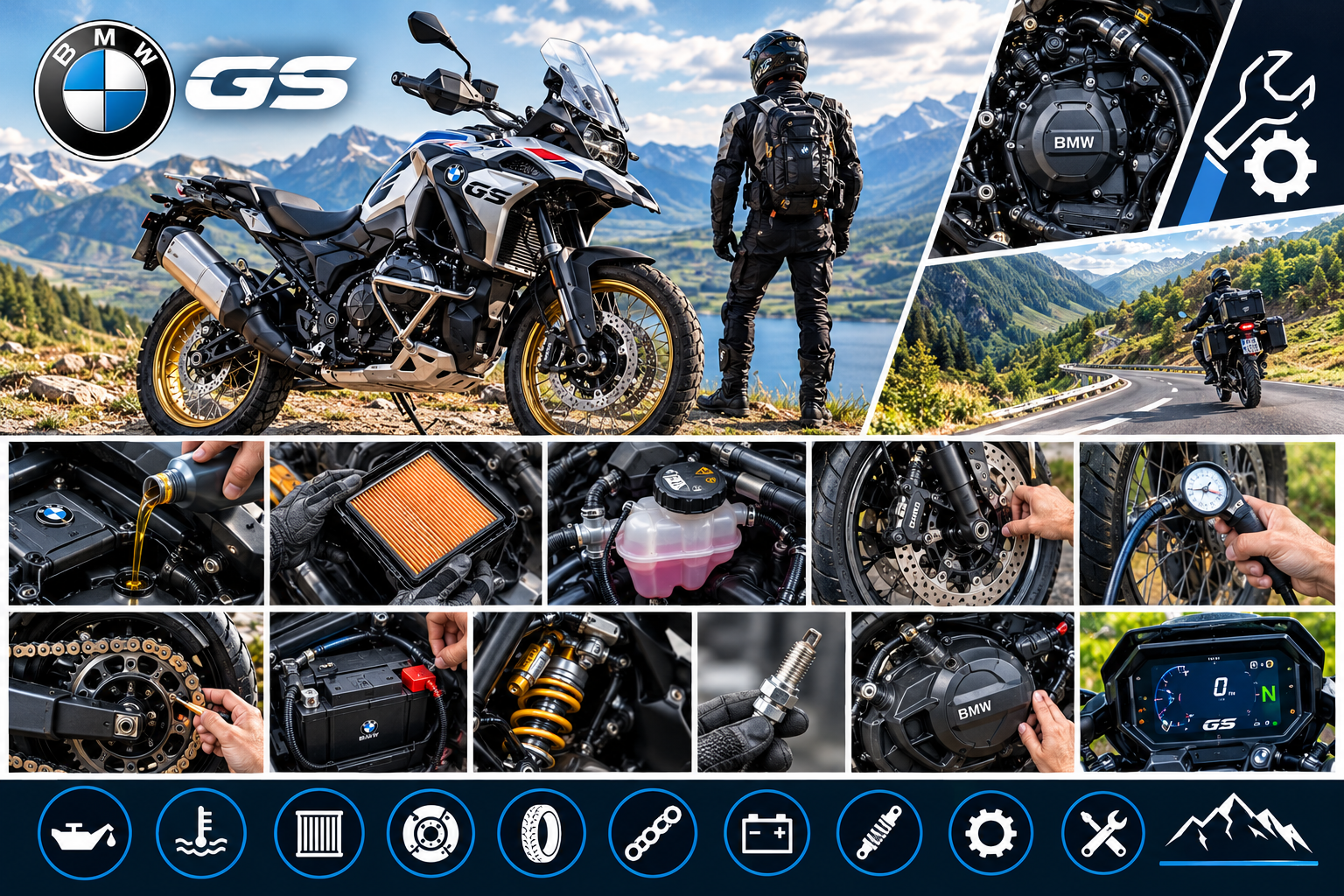
If you own a BMW GS, you already know that an adventure motorcycle needs more than regular oil changes. A GS may spend its life commuting on pavement, touring across highways, exploring gravel roads, or handling demanding off-road conditions. That combination makes proper maintenance especially important.
A well-maintained BMW GS can deliver strong performance, confident handling, and dependable long-distance riding. However, neglecting basic maintenance can gradually lead to poor performance, starting problems, unusual noises, brake issues, drivetrain wear, or expensive repairs.
This guide explains the most important BMW GS maintenance and repair areas that owners should understand. Whether you ride a GS for daily transportation, weekend adventures, or long-distance touring, these practical checks can help you keep the motorcycle reliable.
Why BMW GS Maintenance Matters
Adventure motorcycles are exposed to a wider range of conditions than many street motorcycles. A BMW GS may encounter rain, dust, mud, gravel, water crossings, extreme temperatures, heavy luggage, and long periods of high-speed highway riding.
These conditions can affect several systems at the same time.
Regular maintenance helps you identify problems before they become major failures. It also gives you an opportunity to inspect components that may not receive attention during a normal visual check.
Important areas include:
- Engine and engine oil
- Cooling system
- Air intake and air filter
- Fuel system
- Battery and electrical components
- Brakes
- Tires and wheels
- Suspension
- Final drive
- Clutch and transmission
- Drive chain on applicable GS models
- Controls and cables
- Fasteners and protective components
Check the Engine Oil Regularly
Engine oil is one of the most important maintenance items on any BMW GS.
Oil lubricates internal engine components and helps control heat and wear. Long-distance riding, high engine temperatures, dusty environments, and heavy loads can make proper lubrication particularly important.
Always check the oil according to the procedure specified for your particular GS model. The motorcycle should be positioned correctly, and the engine should be at the appropriate temperature if the owner’s instructions require it.
Look for:
- Low oil level
- Oil leaks
- Unusual oil consumption
- Dark or contaminated oil
- Oil around seals or engine covers
Do not simply add oil repeatedly without investigating why the level is dropping. A persistent low oil level can indicate a leak or excessive consumption that deserves further diagnosis.
Keep the Cooling System Healthy
Liquid-cooled BMW GS models depend on the cooling system to maintain the correct engine temperature.
Inspect the coolant reservoir and look for signs of leakage around hoses, connections, the radiator, and nearby components.
The radiator also deserves attention after off-road riding. Mud, insects, leaves, and dirt can reduce airflow through the radiator.
Never attempt to remove a hot cooling-system cap if your motorcycle uses a pressurized system. Allow the motorcycle to cool before performing inspections that could expose you to hot coolant or steam.
If the temperature rises unusually high or the cooling fan behaves abnormally, investigate the problem instead of continuing to ride normally.
Inspect the Air Filter After Dusty Riding
A BMW GS is designed for adventure riding, which means it can encounter dusty roads and trails.
A dirty air filter can restrict airflow into the engine. Severe contamination can affect throttle response, engine performance, and fuel economy.
Inspect the air filter according to your model’s service procedure, especially if you have recently ridden:
- Gravel roads
- Dusty trails
- Construction areas
- Dry off-road terrain
- Areas with heavy airborne dirt
Do not assume the air filter is clean simply because the motorcycle is running normally. A filter can become progressively restricted before the rider notices an obvious performance problem.
Check the Battery and Electrical System
Adventure motorcycles often contain numerous electrical systems, including lighting, engine management, displays, sensors, ABS, charging components, and accessories.
A weak battery can create confusing symptoms.
Possible signs include:
- Slow cranking
- Intermittent starting
- Electrical warnings
- Flickering displays
- Unusual electronic behavior
- Accessories shutting down unexpectedly
Inspect the battery terminals for looseness or corrosion. If the motorcycle has been sitting unused for an extended period, check the battery condition before starting a long trip.
If the battery repeatedly loses charge, do not automatically replace it. The charging system should also be checked.
Inspect the Tires Before Every Adventure
Tires are critical on a heavy adventure motorcycle.
Check tire pressure when the tires are cold and follow the pressure recommendations for your specific motorcycle and riding conditions.
Also inspect the tires for:
- Uneven wear
- Cuts
- Cracks
- Embedded objects
- Damaged sidewalls
- Excessive wear
- Abnormal tread patterns
Adventure riders sometimes reduce tire pressure for specific off-road conditions, but pressure should not be changed randomly. Follow the tire and motorcycle manufacturer’s recommendations for the intended riding situation.
Incorrect pressure can affect handling, tire temperature, braking, and stability.
Pay Attention to the Wheels and Spokes
Some BMW GS configurations use spoke wheels designed for demanding adventure use.
If your GS has spoke wheels, inspect the spokes periodically for damage or unusual looseness. A damaged wheel should not be ignored.
Also inspect the rims after hard off-road riding, particularly after hitting rocks, deep potholes, or other obstacles.
A wheel that develops damage can affect handling and tire sealing.
Maintain the Braking System
The braking system deserves special attention because a GS can carry a rider, passenger, luggage, and additional equipment.
Inspect the brake pads and pay attention to changes in braking feel.
Warning signs include:
- Reduced braking performance
- Unusual noises
- Excessive lever travel
- Vibration during braking
- Brake fluid leakage
- Uneven pad wear
Brake fluid should be maintained and replaced according to the manufacturer’s recommended service schedule.
If the brake lever suddenly feels significantly different, do not treat the problem as normal wear. Have the braking system inspected before continuing to ride.
Check the Final Drive
One of the areas that deserves particular attention on many BMW GS motorcycles is the final-drive system.
Depending on the specific GS model, the drivetrain design may differ, so always follow the maintenance procedure for your motorcycle.
Look for:
- Oil leakage
- Unusual play
- Grinding or whining noises
- Abnormal vibration
- Damage around the final-drive housing
A final-drive problem can become expensive if ignored. Any unusual noise or movement should be investigated early.
Chain Maintenance on Applicable GS Models
Not every BMW GS uses a chain final drive, so this section applies only to models equipped with a chain.
A chain should be kept properly lubricated and adjusted according to the manufacturer’s specifications.
Check for:
- Excessive slack
- Tight spots
- Rust
- Damaged links
- Worn sprocket teeth
- Uneven chain movement
After riding through mud or water, clean and inspect the chain rather than allowing contaminated lubricant and dirt to remain on it.
Inspect the Suspension
A BMW GS is built to handle varying road surfaces, but its suspension still requires inspection.
Look for oil around fork tubes and shock components. Inspect the suspension after aggressive off-road riding or a hard impact.
Pay attention to changes in:
- Ride height
- Steering behavior
- Rebound
- Stability
- Suspension noise
A motorcycle that suddenly feels unstable, excessively soft, or unusually harsh deserves a proper inspection.
Check for Loose Fasteners
Adventure riding can expose the motorcycle to vibration and repeated impacts.
During regular inspections, look for loose or damaged fasteners around components such as:
- Hand guards
- Skid plates
- Luggage mounts
- Mirrors
- Exhaust components
- Engine protection parts
- Foot controls
Do not randomly tighten bolts without knowing the correct torque specification. Critical fasteners should be tightened according to the manufacturer’s service information.
Clean the Motorcycle After Off-Road Riding
Cleaning is not just about appearance.
Mud and dirt can hide leaks, damage, loose fasteners, and worn components. A dirty motorcycle can also retain moisture around sensitive areas.
After demanding off-road riding, clean the motorcycle carefully and inspect it as you go.
Pay particular attention to:
- Wheels
- Brake components
- Radiator area
- Engine protection
- Suspension
- Final drive
- Chain on applicable models
- Electrical connectors
- Luggage mounts
Avoid directing high-pressure water directly at bearings, seals, electrical connectors, or other sensitive areas.
Watch for Warning Lights and Unusual Behavior
Modern BMW motorcycles use electronic systems to monitor many operating conditions.
A warning light should never be ignored simply because the motorcycle continues running.
If you notice a warning message, unusual engine behavior, poor starting, loss of power, or unexpected electronic behavior, determine the cause before continuing a long journey.
A diagnostic scan can sometimes help identify an electronic fault, but diagnostic equipment should be used alongside proper mechanical inspection rather than as a replacement for it.
Common BMW GS Problems That Should Not Be Ignored
Some symptoms deserve immediate attention.
Difficult Starting
Possible causes can include a weak battery, electrical problems, fuel-system issues, sensor faults, or other mechanical conditions.
Poor Engine Performance
Poor throttle response or reduced power may be related to air intake, fuel delivery, ignition, sensors, or maintenance condition.
Unusual Drivetrain Noise
New grinding, knocking, whining, or clicking sounds should be investigated, particularly if they change with vehicle speed or throttle position.
Excessive Vibration
Vibration can result from tires, wheels, drivetrain components, engine operation, loose hardware, or suspension-related problems.
Fluid Leaks
Any unexplained oil, coolant, brake fluid, or final-drive lubricant leak deserves attention.
Prepare Your BMW GS Before a Long Trip
A long-distance adventure should not begin with a quick glance at the fuel gauge.
Before a major trip, inspect the motorcycle systematically.
Check:
- Engine oil
- Coolant
- Brake condition
- Tire pressure
- Tire condition
- Battery
- Lights
- Drive system
- Suspension
- Luggage mounts
- Fasteners
- Tool kit and emergency equipment
If the motorcycle has recently received major service, give yourself enough time to confirm that everything is operating normally before leaving.
When You Should Stop Riding
Some problems should not be treated as minor maintenance issues.
Stop riding and investigate the motorcycle if you experience:
- Severe loss of braking
- Major fluid leakage
- Sudden engine warning symptoms
- Overheating
- Severe drivetrain noise
- Unstable steering
- Damaged tire or wheel
- Sudden loss of power
- Serious electrical problems
Continuing to ride with a potentially dangerous mechanical problem can turn a manageable repair into a much larger problem—or create a safety hazard.Read also kawasaki-ninja-500-mileage-problems-guide
Final Thoughts
A BMW GS is capable of handling everything from everyday roads to serious adventure travel, but its reliability depends heavily on proper maintenance.
The best approach is not to wait for a major failure. Regularly inspect the engine, tires, brakes, cooling system, battery, suspension, drivetrain, and other critical components. Clean the motorcycle after difficult rides and pay attention to changes in sound, vibration, handling, or performance.
You do not need to be a professional mechanic to perform many basic inspections. However, complicated engine, electronic, braking, suspension, or drivetrain repairs should be handled with the correct service information and appropriate tools.
A properly maintained BMW GS is not only more reliable—it is also easier to trust when you are hundreds of miles away from home.