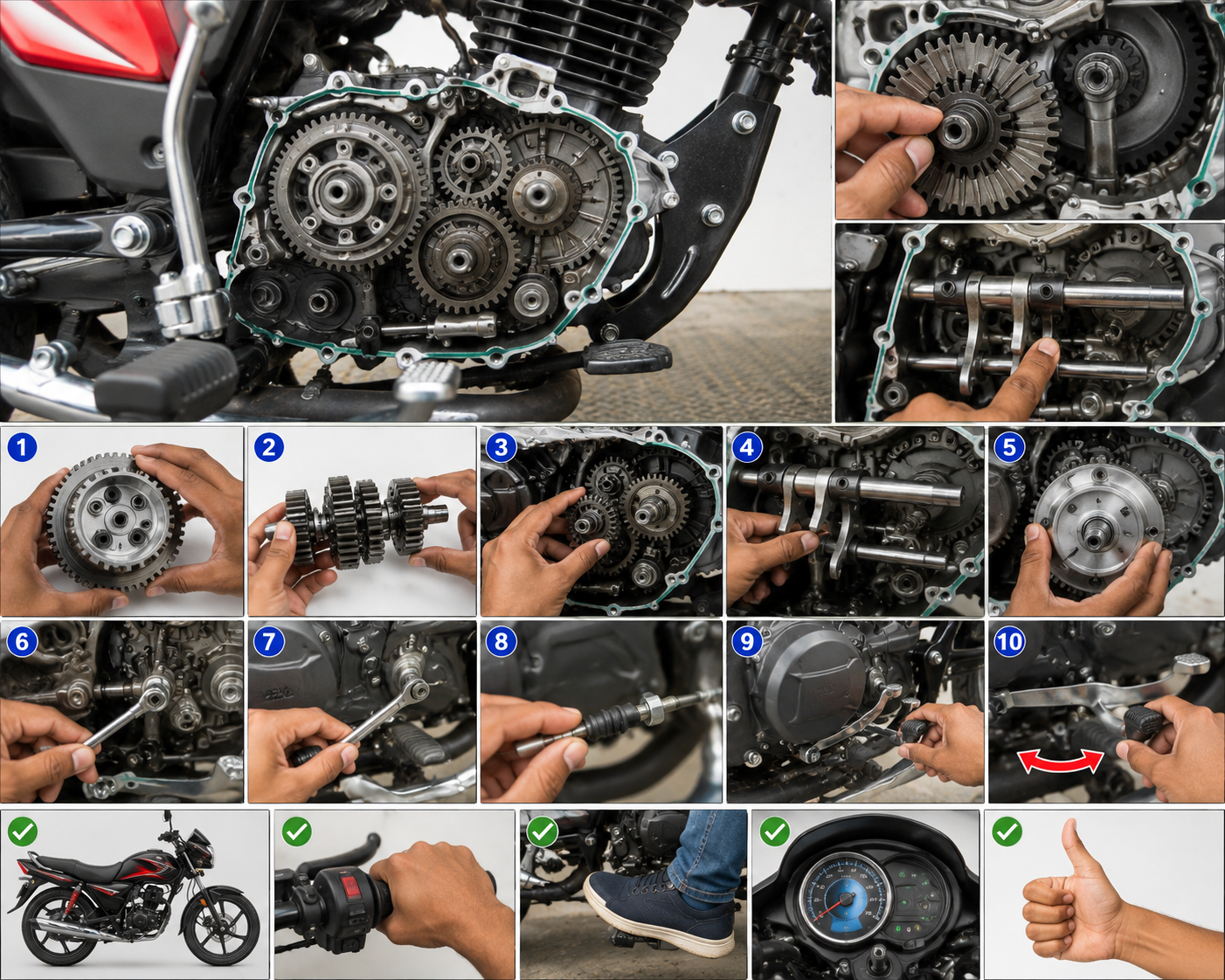
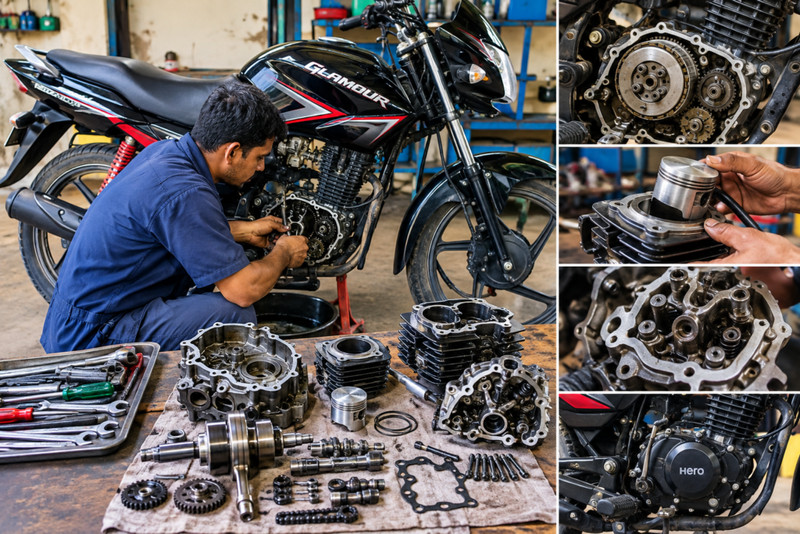
Excessive smoke, weak pickup, hard starting, engine noise, rising oil use, and poor mileage often lead riders to search for Glamour bike full engine repairing. These signs can point to internal wear, but they can also come from a blocked air filter, worn spark plug, poor tuning, or clutch trouble.
A full engine repair goes well beyond routine servicing. It may involve testing, engine removal, dismantling, machining, replacing worn parts, careful reassembly, and road testing. The final cost depends on the bike’s model year, internal damage, parts quality, workshop skill, and the amount of machining required.
Recognizing When a Glamour Bike Needs Full Engine Repairing
A complete rebuild should follow clear evidence of internal damage. One symptom alone does not prove that the engine needs to be opened.
Warning Signs of Internal Engine Damage
Blue or heavy exhaust smoke often points to oil entering the combustion chamber. Low power, hard starting, knocking, tapping, overheating, high oil use, and poor fuel mileage can also signal worn piston rings, a damaged piston, poor valve sealing, or crankshaft wear.
Record when each symptom appears. Cold starts, hard acceleration, high-speed riding, and engine braking can produce different clues. A single fault may not require a full rebuild, so avoid approving major work based on smoke or noise alone.
Problems That May Need Only Servicing
A dirty air filter, weak spark plug, carburetor fault, fuel-injection issue, weak battery, ignition fault, blocked exhaust, incorrect valve clearance, or clutch adjustment can imitate engine failure. These repairs cost less and should be checked first.
Ask for a written diagnosis before approving engine removal. It should state which tests confirmed internal wear, rather than using general phrases such as “engine problem” or “low pickup.”
Tests That Confirm the Repair
A technician may use compression testing, leak-down testing, oil inspection, valve-train checks, crankcase noise assessment, and smoke-pattern analysis. Metal particles in the oil can support a finding of internal wear, but they still need proper inspection.
Compression readings must match the exact Glamour model and engine version. Compare the results with the manufacturer service manual or ask a qualified technician to explain them before authorizing a rebuild.
What Glamour Bike Full Engine Repairing Includes
The repair may keep the motorcycle at a workshop for several days, especially when machining or extra parts are needed. A clear process helps you understand the labor charge.
Engine Removal and Complete Dismantling
The workshop disconnects fuel, wiring, exhaust, intake, clutch controls, and transmission-related parts before removing the engine. Each part should be labeled, cleaned, and checked to prevent incorrect reassembly.
Ask the workshop for photographs of damaged parts before replacement. Photos of worn rings, scored cylinder walls, damaged bearings, or burnt valves make the estimate easier to verify.
Cylinder, Piston, and Crankshaft Inspection
The technician checks the cylinder bore, piston, rings, connecting rod, crankshaft, bearings, and oil-sealing surfaces. Measurement decides whether a part can be reused, honed, machined, or replaced.
Visual inspection alone is not enough. Cylinder and piston sizes must match the exact Glamour engine version, or the repaired engine may suffer low compression, noise, oil use, or early wear.
Cylinder Head, Valves, and Camshaft Checks
The cylinder head, valves, valve seats, guides, camshaft, rocker arms, timing parts, and head gasket surface all need inspection. Poor valve sealing can cause low compression, hard starting, weak acceleration, and overheating.
Damaged gaskets and seals should be replaced during assembly. Reusing flattened or hardened sealing parts can cause oil leaks and repeat labor costs.
Choosing Parts for Glamour Bike Full Engine Repairing
Parts affect performance, service life, warranty support, and the value of the repair. Cheap parts can increase the chance of opening the engine again.
Genuine, OEM-Equivalent, and Aftermarket Parts
Genuine parts come through the motorcycle brand’s supply chain. OEM-equivalent parts meet similar design and size standards, while aftermarket parts vary widely in quality. No category is best for every repair, but critical parts need clear specifications and a trusted source.
Verify the part number, package, warranty, and model-year fit before purchase. Pay close attention to piston assemblies, bearings, oil seals, timing parts, and gasket kits.
Parts Commonly Replaced During Repair
Depending on measured wear, the job may need piston rings, a piston, gaskets, oil seals, bearings, clutch plates, valves, timing parts, and a spark plug. These parts should not be replaced from an automatic checklist.
A reusable-looking bearing, seal, or timing part may still have hidden wear. Ignoring it can force the workshop to open the engine again and charge labor twice.
Avoiding Incorrect or Poor-Quality Parts
Counterfeit, badly machined, or incorrectly sized parts can cause leaks, low compression, overheating, abnormal noise, and rapid wear. Incorrect clearances may damage the crankshaft or piston after only a short period.
Request an itemized parts list and keep purchase receipts. These records help with warranty claims and future service history.
Managing the Glamour Bike Full Engine Repairing Process
Good repair work depends on measurement, clean assembly, correct torque, and careful testing. A low quote has little value if the engine fails again.
Measurement and Pre-Assembly Checks
The workshop should measure cylinder wear, crankshaft condition, bearing clearances, valve condition, and gasket surfaces before closing the engine. Machining must follow service-manual limits, not guesswork.
Ask whether the technician records these measurements. Written clearance checks show that the engine was built to the correct limits.
Correct Reassembly and Torque
Clean assembly, correct gasket placement, fresh lubrication on moving parts, accurate timing alignment, and proper fastener torque all matter. Incorrect timing or tightening can cause leaks, poor power, internal damage, or complete failure.
Choose a workshop with torque tools and model-specific technical references. Hand-tightening critical fasteners is not a reliable repair method.
Start-Up and Post-Repair Testing
After assembly, the technician should check oil circulation, leaks, idle quality, engine noise, smoke, temperature, clutch action, gear changes, and charging performance. The first road test should be gradual, not a high-speed run under heavy load.
Get written instructions for the first inspection and oil change. Ask the workshop to record any remaining noise or oil seepage before delivery.
Glamour Bike Full Engine Repairing Cost, Time, and Warranty
A fixed price is difficult before dismantling because hidden damage may appear inside the engine. A proper estimate should separate labor, parts, machining, fluids, and extra work.
What Determines the Total Cost
Your bill may include diagnosis, engine removal, assembly labor, cylinder machining, replacement parts, oil, gaskets, clutch work, and electrical troubleshooting. Region, model year, parts source, and engine condition also affect the price.
Compare itemized estimates instead of choosing the lowest total. A higher quote may include better bearings, proper machining, new seals, and a longer warranty.
Questions to Ask Before Approval
Ask these questions before work begins:
- What fault did the tests confirm?
- Which parts need replacement, and which can be reused?
- Is cylinder honing or other machining required?
- How long will the repair take?
- What break-in method and oil schedule should be followed?
- Does extra work require approval first?
- What parts and labor does the warranty cover?
Get the estimate, expected completion date, and warranty terms in writing. Ask what happens to the replaced parts after the repair.
Understanding Warranty Coverage
Warranty terms may differ for labor, genuine parts, aftermarket parts, machining, oil leaks, and damage caused by poor maintenance. Confirm the warranty period, exclusions, claim process, and required follow-up checks.
Keep invoices, part details, service records, and post-repair inspection notes. They can support a claim if a problem appears soon after delivery.
Running In and Maintaining a Repaired Glamour Engine
“Engine ripening” usually means engine running-in, also called engine break-in, after a rebuild. The correct method depends on the parts replaced and the machining performed.
Engine Break-In After Full Repair
Follow the repairer’s or manufacturer’s instructions. During the early period, avoid prolonged high-speed riding, heavy loads, harsh acceleration, and long operation at one engine speed when the technician advises against them.
Check the oil level, leaks, smoke, temperature, engine sound, clutch action, and gear shifting. Report sudden changes instead of waiting for the next service.
Early Inspection and Oil Service
The first inspection and oil change should follow the workshop’s schedule. The technician can check for metal particles, gasket leaks, loose fasteners, rising oil use, and changes in engine sound.
Record the mileage, oil grade, service date, and any symptoms after each early inspection. These notes can reveal a problem before it causes major damage.
Maintenance That Prevents Repeat Repairs
Use the correct oil grade and change it on schedule. Keep the air filter clean, inspect the spark plug, check valve clearance, maintain the chain, and follow the owner’s manual for lubrication and cooling checks.
Overloading, dirty fuel, skipped oil changes, and ignored warning signs speed up engine wear. Regular service costs far less than another full rebuild.Read also yamaha-r15-v4-step-by-step-service-guide
Conclusion
Successful Glamour bike full engine repairing starts with testing, not guesswork. Confirm internal damage through compression, leak-down, oil, valve, and noise checks before approving major work.
The repair should include measured inspection of the piston, cylinder, crankshaft, bearings, valves, and timing parts. Use correctly matched components, insist on an itemized estimate and written warranty, and follow clear break-in and oil-service instructions.
Choose a workshop that documents its measurements, assembly process, and final tests. Careful workmanship and disciplined maintenance give the repaired Glamour engine the best chance of delivering steady power for many more miles.
2 thoughts on “Glamour Bike Full Engine Repairing: Restore Power and Extend Engine Life”