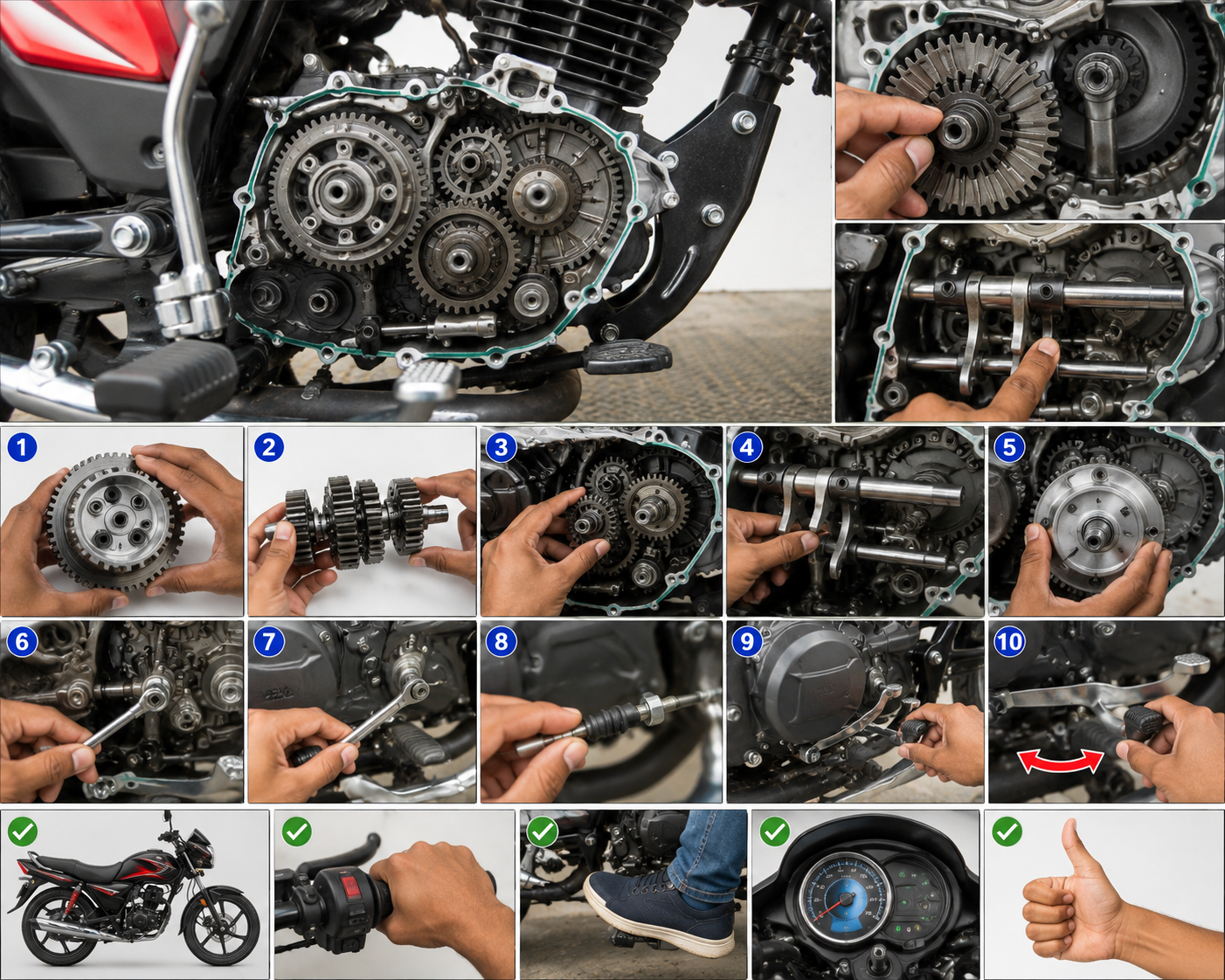
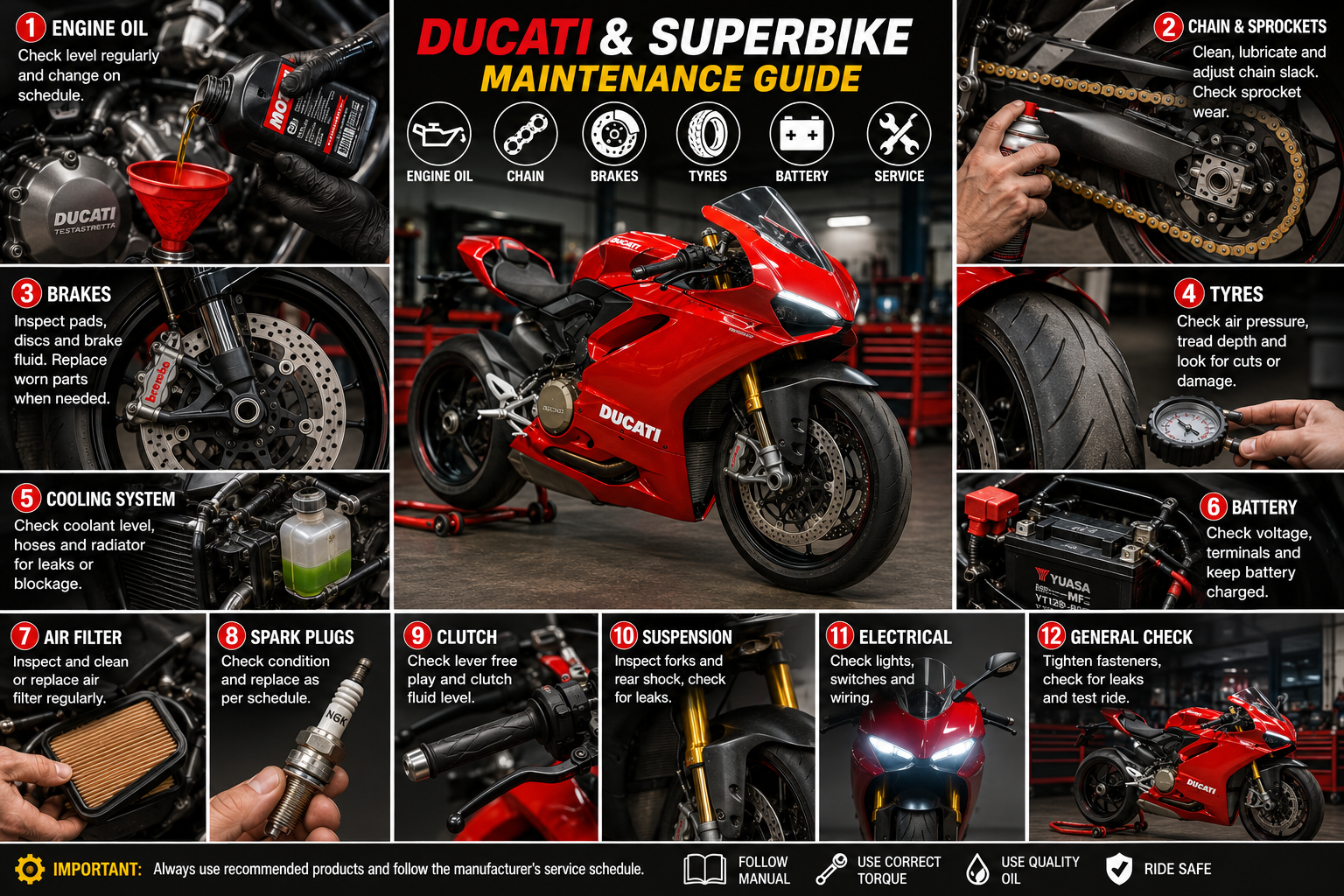
Ducati motorcycles and other modern superbikes are designed to deliver strong acceleration, high-speed performance, precise handling, and advanced braking. However, high-performance motorcycles also require proper maintenance because their engines, transmissions, brakes, suspension systems, tyres, and electrical components work under demanding conditions.
Regular maintenance is not only about changing engine oil. A proper maintenance routine includes checking fluids, chain condition, brakes, tyres, battery, cooling system, air filtration, electrical components, suspension, fasteners, and overall motorcycle condition.
The exact maintenance schedule, fluid specifications, torque values, valve-clearance requirements, and service procedures vary between Ducati models and other superbikes. Therefore, always follow the manufacturer’s service information for your specific motorcycle.
1. Start With a Basic Motorcycle Inspection
Before riding or servicing a superbike, perform a quick visual inspection.
Look around the motorcycle for:
- Oil leaks
- Coolant leaks
- Damaged hoses
- Loose fasteners
- Damaged wiring
- Tyre damage
- Brake-fluid leakage
- Chain problems
- Loose body panels
- Abnormal fluid levels
A small leak or loose component can become a serious problem if ignored.
Make it a habit to inspect the motorcycle before long rides, especially after maintenance or extended storage.
2. Check the Engine Oil
Engine oil is one of the most important maintenance items on a high-performance motorcycle.
The engine oil lubricates internal components and helps control heat and wear.
Check the oil level using the procedure specified for your particular Ducati or superbike. Some motorcycles require the engine to be at a specific temperature or the motorcycle to be positioned correctly before checking the oil level.
Do not simply add oil whenever the level appears low without investigating why it dropped.
If the oil level repeatedly decreases, inspect the motorcycle for external leaks or possible internal oil consumption.
Use only the engine oil grade and specification recommended for your motorcycle.
3. Change Engine Oil and Filter on Schedule
High-performance engines require clean and correctly specified engine oil.
When changing the oil:
- Warm the engine according to the manufacturer’s procedure.
- Position the motorcycle securely.
- Drain the old oil into a suitable container.
- Replace the oil filter if required.
- Inspect the drain plug and sealing washer.
- Reinstall components using the specified torque.
- Add the recommended quantity of new oil.
- Check the final oil level correctly.
- Start the engine and inspect for leaks.
Never guess the oil quantity or tightening torque.
The correct specifications depend on the exact engine and model.
4. Maintain the Drive Chain
For chain-driven superbikes, chain maintenance is essential.
A neglected chain can create excessive noise, poor power transmission, accelerated sprocket wear, and potentially serious safety problems.
Regularly inspect:
- Chain lubrication
- Chain slack
- Rust
- Tight or seized links
- Excessive wear
- Sprocket teeth
- Chain alignment
Clean the chain with a suitable motorcycle chain cleaner and lubricate it using a product appropriate for the chain and riding conditions.
Never adjust chain tension simply by guessing. Follow the manufacturer’s specified measurement and adjustment procedure.
5. Inspect the Sprockets
The front and rear sprockets should be inspected whenever chain maintenance is performed.
Look for unusual tooth wear, hooked teeth, damage, or excessive wear.
Replacing only a badly worn chain while leaving severely worn sprockets can shorten the life of the new chain.
A complete drive-system inspection should consider the chain and both sprockets together.
6. Check the Brake System
Superbikes rely heavily on their braking systems, so brake inspection should never be neglected.
Check:
- Front brake pads
- Rear brake pads
- Brake discs
- Brake-fluid level
- Brake hoses
- Calipers
- ABS-related components
- Signs of leakage
Inspect the brake discs for abnormal scoring, cracks, excessive wear, or other damage.
If the brake lever feels unusually soft or spongy, do not continue riding without identifying the cause.
Brake-system problems should be repaired using the correct procedures and components.
7. Maintain Brake Fluid
Brake fluid absorbs moisture over time and may require replacement according to the manufacturer’s maintenance schedule.
Use only the correct brake-fluid specification for your motorcycle.
Never mix incompatible fluids.
When servicing the brake system, maintain cleanliness and prevent contamination.
Brake fluid can damage painted surfaces, so handle it carefully.
If you are not experienced with brake bleeding or hydraulic-system servicing, have the work performed by a qualified technician.
8. Check Tyres Carefully
Tyres are one of the most important components on a superbike because they provide the contact between the motorcycle and road.
Inspect the tyres for:
- Correct inflation pressure
- Tread condition
- Uneven wear
- Cuts
- Cracks
- Punctures
- Abnormal bulges
- Age-related deterioration
Use the tyre-pressure recommendation specified for your motorcycle and riding conditions.
Do not automatically use the pressure printed on the tyre sidewall as the motorcycle’s recommended operating pressure.
Check tyre pressure regularly, especially before long rides.
9. Inspect Wheel Condition
During tyre checks, inspect the wheels as well.
Look for visible damage, cracks, loose components, or anything unusual.
After riding over a major pothole or road obstacle, inspect the wheel and tyre carefully.
If the motorcycle develops vibration, pulling, or unusual handling after an impact, have the wheels, tyres, suspension, and alignment checked.
10. Check the Cooling System
High-performance engines generate substantial heat.
For liquid-cooled motorcycles, regularly inspect:
- Coolant level
- Radiator
- Cooling hoses
- Hose connections
- Radiator fan operation
- Signs of coolant leakage
Never open a hot cooling system because pressurized coolant can cause serious burns.
Allow the motorcycle to cool sufficiently before performing cooling-system maintenance.
Use the correct coolant specification recommended for the motorcycle.
11. Keep the Radiator Clean
A dirty radiator can restrict airflow and reduce cooling efficiency.
Inspect the radiator for accumulated dust, insects, mud, or other debris.
Clean it carefully without damaging the delicate fins.
Do not use excessive water pressure directly against the radiator because high-pressure cleaning can bend or damage the fins.
A clean radiator helps maintain proper engine temperature during demanding riding conditions.
12. Inspect the Air Filter
The engine needs clean air for proper combustion.
Inspect the air filter according to the manufacturer’s service schedule.
If the filter is dirty or damaged, replace or service it according to the correct procedure.
Do not install an aftermarket air filter or intake modification simply because it claims to increase horsepower or mileage.
Any modification to the intake system can affect engine operation and may require corresponding adjustments.
13. Check Spark Plugs and Ignition Components
For petrol engines, spark plugs and ignition components should be inspected according to the manufacturer’s maintenance schedule.
Possible signs of ignition-related problems include:
- Difficult starting
- Misfiring
- Rough idle
- Poor acceleration
- Reduced performance
- Increased fuel consumption
Do not replace spark plugs based only on appearance. Use the correct specification and replacement interval for the particular engine.
14. Inspect the Battery
Modern superbikes depend heavily on their electrical systems.
A weak battery can cause:
- Difficult starting
- Electronic warnings
- Unstable electrical operation
- Starter problems
- Charging-system complaints
Inspect the battery terminals for corrosion and make sure the connections are secure.
If the motorcycle is stored for an extended period, use an appropriate battery-maintenance charger if recommended for the battery type.
15. Check the Charging System
If the battery repeatedly becomes weak, do not simply replace the battery.
The charging system should also be tested.
Depending on the motorcycle, this may involve checking the:
- Alternator or generator
- Regulator/rectifier
- Wiring
- Battery
- Electrical connectors
A professional electrical diagnosis can determine whether the motorcycle is charging correctly.
16. Inspect the Clutch
A superbike’s clutch works under considerable load.
Check for symptoms such as:
- Clutch slipping
- Difficulty selecting gears
- Abnormal clutch lever feel
- Excessive clutch noise
- Poor clutch engagement
For hydraulic clutch systems, inspect the fluid level and look for leaks.
For cable-operated systems, inspect cable condition and adjustment according to the manufacturer’s procedure.
Never ignore a clutch that suddenly changes its operating feel.
17. Maintain the Suspension
Suspension condition has a major influence on handling and rider confidence.
Inspect the front forks for oil leakage and damage.
Check the rear shock absorber and associated components.
Look for:
- Oil leakage
- Damaged seals
- Abnormal movement
- Loose components
- Unusual suspension noise
Suspension settings should be appropriate for the rider, motorcycle configuration, and intended use.
If suspension components require internal servicing, professional equipment and model-specific procedures may be necessary.
18. Check Steering and Controls
The steering system should move smoothly without unusual resistance or excessive play.
Inspect:
- Handlebar
- Steering bearings
- Brake lever
- Clutch lever
- Throttle
- Switchgear
- Mirrors
- Cables and hoses
The throttle should operate smoothly and return correctly.
Never ride a motorcycle if the throttle does not operate safely.
19. Inspect the Electrical System
Modern Ducati motorcycles and superbikes can contain sophisticated electronic systems.
Inspect visible wiring and connectors for:
- Loose connections
- Damaged insulation
- Corrosion
- Water entry
- Heat damage
- Poor previous repairs
If a warning light appears, use appropriate diagnostic equipment and the manufacturer’s service information to identify the cause.
Do not randomly replace electronic components based only on a dashboard warning.
20. Check Engine and Valve-Train Service Requirements
Some high-performance engines have specific valve-clearance inspection intervals.
Valve clearance can influence:
- Starting
- Idle quality
- Engine performance
- Noise
- Long-term reliability
The correct clearance must be measured using the procedure and specifications for the exact engine.
This is not an area where a mechanic should guess measurements.
If the motorcycle requires a major valve-service procedure, it is often best handled by a technician with the correct tools, service information, and experience.
21. Keep Fasteners Properly Tightened
Superbikes experience vibration, heat cycles, acceleration forces, and braking loads.
During scheduled maintenance, inspect important fasteners according to the manufacturer’s maintenance procedure.
Use a calibrated torque wrench where specified.
Never assume that every bolt should simply be tightened as hard as possible.
Over-tightening can damage threads or components, while under-tightening can allow parts to loosen.
22. Keep the Motorcycle Clean
Cleaning is not only about appearance.
Regular cleaning can help reveal:
- Oil leaks
- Coolant leaks
- Damaged components
- Loose fasteners
- Brake-fluid leaks
- Chain problems
- Corrosion
Use cleaning products appropriate for motorcycle finishes and avoid directing high-pressure water into electrical connectors, bearings, switches, or sensitive components.
After washing, dry the motorcycle properly and lubricate components where appropriate.
23. Maintenance Before Long Rides
Before a long-distance ride, perform a complete inspection.
Check:
Tyres → Brakes → Engine oil → Coolant → Chain → Battery → Lights → Controls → Leaks
Also make sure the motorcycle has no warning lights or unusual sounds.
Do not start a long journey immediately after discovering a mechanical problem without resolving it.
24. Proper Storage of a Superbike
If the motorcycle will not be used for an extended period, prepare it correctly.
Clean the motorcycle thoroughly and store it in a dry, protected environment.
Keep the battery maintained according to its type and the manufacturer’s recommendations.
Protect the motorcycle from excessive moisture and direct environmental exposure.
Before returning the motorcycle to regular use, inspect the tyres, brakes, fluids, battery, chain, and other important components.
Common Superbike Maintenance Mistakes
Avoid these common mistakes:
- Ignoring tyre pressure
- Delaying oil changes
- Riding with a damaged or excessively worn chain
- Ignoring brake-fluid condition
- Using incorrect engine oil
- Neglecting coolant levels
- Ignoring battery problems
- Overlooking warning lights
- Using incorrect tightening torque
- Installing unsuitable aftermarket parts
- Ignoring unusual engine noises
- Riding with damaged tyres
- Neglecting scheduled valve inspection
- Using excessive pressure when cleaning the motorcycle
A Simple Ducati & Superbike Maintenance Checklist
Before Every Ride
- Check tyre condition
- Check brake operation
- Check for fluid leaks
- Check throttle operation
- Check lights and indicators
- Check warning lights
- Listen for unusual sounds
Regularly
- Check tyre pressure
- Inspect and lubricate the chain
- Check engine oil
- Inspect brake pads
- Check coolant
- Inspect battery terminals
- Clean the motorcycle
During Scheduled Service
- Replace engine oil and filter as required
- Inspect air filter
- Inspect spark plugs where applicable
- Check valve clearance when scheduled
- Inspect brakes and brake fluid
- Inspect suspension
- Inspect chain and sprockets
- Check electrical and diagnostic systems
- Inspect important fasteners Read also also royal-enfield-bullet-350-engine-repair
Final Thoughts
Maintaining a Ducati or superbike requires more attention than simply washing the motorcycle and changing engine oil occasionally. These high-performance machines depend on a properly maintained engine, cooling system, transmission, chain, brakes, tyres, suspension, battery, and electronic systems.
The best approach is preventive maintenance. Check small problems before they become expensive failures, follow the manufacturer’s recommended service intervals, use the correct fluids and replacement parts, and never guess critical specifications such as torque values, valve clearances, tyre pressures, or fluid quantities.
Remember that every Ducati and superbike can have different maintenance requirements. Always refer to the owner’s manual or official service information for the exact model and year.
With regular inspections and responsible maintenance, a high-performance motorcycle can remain reliable, safe, and enjoyable for many years.
I hope this Ducati & Superbike Maintenance Guide helps motorcycle owners and enthusiasts understand the most important areas of superbike care. For more practical motorcycle repair guides, maintenance tips, engine troubleshooting, and workshop knowledge, keep visiting Rajesh Technical Giyan.
1 thought on “Ducati & Superbike Maintenance: Step-by-Step Care Guide”